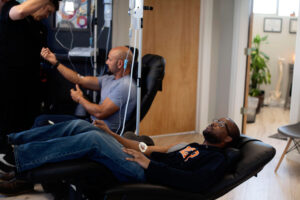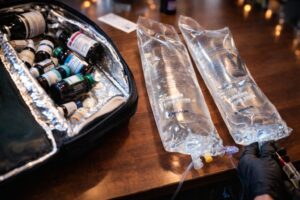
An IV drip delivers fluids, vitamins, minerals, or medications directly into your bloodstream for quick absorption.
What you do afterward can make a big difference in how you feel and how well your treatment works.
Here’s what to avoid, what’s normal, and how to take care of yourself once your drip is done.
What Not to Do Right After an IV Drip
Let’s take a look at what you should avoid directly following your IV drip therapy:
Don’t exercise or do intense physical activity (for 6–24 hours)
Your body needs time to settle after receiving concentrated nutrients and hydration.
Going straight into cardio, weightlifting, or high-intensity workouts can lead to dizziness, fatigue, or irritation at the IV site.
Light walking is usually fine, just avoid anything strenuous.
Don’t lift heavy objects with the treated arm (for at least a day)
The vein at the IV site is still sensitive.
Heavy lifting or repetitive strain can cause bruising, swelling, or irritation.
Give that arm a rest until the next day.
Don’t take a hot bath, sauna, or steam room (for the rest of the day)
Heat causes your blood vessels to expand, which can make you feel lightheaded or dizzy, especially after hydration-focused drips.
Wait until tomorrow for long, hot showers or heat-based relaxation.
Don’t drink alcohol (for 24 hours)
Alcohol pulls water out of your system and works against the hydration you just received.
It can also reduce the effectiveness of vitamin infusions.
If you want the best results, skip alcohol until the next day.
Don’t smoke or vape immediately after
Smoking and vaping constrict blood vessels and hinder the oxygenation your body needs post-drip.
Waiting a few hours, ideally the rest of the day, supports better recovery.
Don’t consume too much caffeine
Studies show that caffeine can act as a diuretic, increasing fluid loss.
If you rely on coffee, keep it light and avoid energy drinks until the next day.
Don’t remove the bandage too early
Keep the bandage on for at least a few hours, even if the site looks fine.
Removing it too soon increases the risk of irritation or contamination.
Don’t ignore concerning symptoms
Mild fatigue or lightheadedness can happen, but if anything feels unusually strong or gets worse, especially dizziness, nausea, or discomfort at the IV site, reach out for guidance.
What Not to Do in the First 24 Hours
Here’s what you should avoid the day of following your IV therapy:
Avoid overhydration
It’s common to think “more water is better,” but overhydration can dilute electrolytes and make you feel worse.
Sip water normally and let your body regulate at its own pace.
Avoid long periods in direct sun if you feel lightheaded
If you’re still adjusting to the treatment, intense heat or sun exposure can worsen dizziness.
Stay cool and shaded until you feel steady.
Don’t get another IV too soon
Unless advised otherwise, wait 48–72 hours before scheduling another drip.
Your body needs time to fully process the nutrients.
Common Mistakes That Can Limit Your Results
Let’s take a look at a few common mistakes that can reduce the benefits of your IV therapy:
- Not eating enough beforehand: Low blood sugar can make you lightheaded.
- Trying to “push through” fatigue: If your body wants rest, listen to it.
- Drinking alcohol or using stimulants too soon: These work against the benefits of the drip.
- Adding supplements immediately after without guidance: Some combinations may not be ideal post-infusion.
Choosing gentle movement, light meals, and steady hydration will support the benefits far more effectively.
What’s Normal and What Isn’t
| Normal After an IV | Not Normal — Contact a Provider |
| Mild soreness or bruising at the site | Increasing redness, swelling, or warmth |
| Light fatigue or temporary dizziness | Red streaking along the vein |
| Slight headache | Persistent or severe dizziness |
| Mild thirst or hunger | Fever, chills, or worsening pain |
When in doubt, it’s always okay to call for guidance.
When to Contact Awaken IV (or Any Medical Provider)
Reach out if you notice:
- The IV site becoming red, swollen, warm, or painful
- Dizziness or nausea that doesn’t improve
- Fainting, rapid heartbeat, or new trouble breathing
- Symptoms that worsen instead of getting better
- Anything that feels “off” or concerning
If you received your drip at Awaken IV in Boulder or Denver, our team can help assess your symptoms and provide next steps.
How Awaken IV Supports You After Treatment
At Awaken IV, serving clients in Boulder and Denver, we guide you through your treatment and the aftercare that follows.
If you ever have questions about how to support your IV results, whether it’s hydration, timing, or activity, our team is here to help you navigate what’s best for your body.
Final Thought: What Not to Do After an IV Drip
A little care goes a long way after an IV drip.
Avoid intense workouts, alcohol, heat exposure, and heavy lifting.
Rest, hydrate sensibly, and give your body the space it needs to respond.
These simple steps help you get the best possible results from your treatment.
FAQs: What Not to Do After an IV Drip
Should you drink water after an IV drip?
Yes, you should drink water after an IV drip, but you don’t need to overdo it. Sip water steadily throughout the day to support hydration without overwhelming your system, especially if your drip already delivered a large volume of fluids.
How long to rest after an infusion?
Most people benefit from resting for at least a few hours after an infusion. Light activity is usually fine, but intense exercise or heavy lifting should wait 6–24 hours, depending on how you feel.
How long after an IV can you shower?
You can shower as soon as you feel steady, but keep the water warm rather than hot. Avoid long, steamy showers the same day, and be gentle around the IV site to prevent irritation.
What should you avoid after an IV drip?
Avoid strenuous exercise, heavy lifting, hot baths or saunas, alcohol, smoking, excessive caffeine, and removing the bandage too early. These can increase irritation, dehydration, or dizziness after the infusion.
How much water is equal to one IV bag?
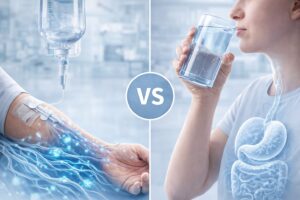
A standard IV bag is typically 500–1000 milliliters, which is roughly equal to drinking two to four cups of water. The difference is that IV fluids bypass digestion and absorb immediately into your bloodstream.
How long does an IV drip stay in your system?
Fluids from an IV drip circulate and absorb quickly, often within minutes, but the effects can last several hours to several days depending on the type of infusion and your body’s needs.
How often can you get IV therapy?
Frequency depends on your goals and the type of drip. Some people schedule weekly treatments, while others receive them monthly or only as needed. Your provider can help determine the safest schedule for your body.
How long do IV fluids take to work?
Most people feel the effects of IV fluids within 15–90 minutes. Hydration improves rapidly, and vitamin or nutrient benefits typically build over the next several hours.