Urgent care vs IV therapy Boulder is not a marketing comparison. It is a clinical decision shaped by altitude, physiology, and symptom severity.
At 5,430 feet above sea level, Boulder residents and visitors experience fluid shifts, oxygen changes, and respiratory adjustments that can amplify symptoms that might feel mild elsewhere. Headaches feel stronger. Fatigue feels heavier. Nausea feels more persistent.
Because altitude alters baseline physiology, deciding whether to visit urgent care or pursue supportive IV therapy requires context rather than urgency.
Understanding that difference protects outcomes.
Why Symptoms Feel Different at 5,430 Feet
At higher elevations, the body compensates for lower oxygen pressure by increasing respiratory rate. This increased breathing leads to greater fluid loss through exhalation. The air in Boulder is also significantly drier than sea level environments, further increasing insensible water loss.
Even mild dehydration at altitude can present with:
-
Headache
-
Lightheadedness
-
Fatigue
-
Reduced exercise tolerance
-
Mild nausea
-
Brain fog
After hiking the Flatirons, training near Chautauqua Park, skiing in nearby mountains, or spending long hours outdoors, these symptoms may intensify.
However, similar symptoms can also reflect more serious conditions.
That is where the distinction between urgent care and IV therapy becomes critical.
Altitude Sickness in Boulder: When It Is Mild and When It Is Not
Altitude sickness in Boulder often presents subtly. At 5,430 feet, many individuals experience mild symptoms during the first days of exposure.
Mild altitude symptoms may include:
-
Headache that improves with hydration
-
Fatigue disproportionate to effort
-
Light sleep disturbance
-
Mild nausea without persistent vomiting
These symptoms are common and often resolve as the body adapts.
However, altitude sickness becomes more serious when symptoms include:
-
Severe or escalating headache
-
Repeated vomiting
-
Marked shortness of breath at rest
-
Difficulty walking in a straight line
-
Confusion or unusual behavior
In these cases, urgent medical evaluation is appropriate.
Supportive IV hydration may assist mild altitude related dehydration, but it does not replace emergency care when neurological or respiratory symptoms escalate.
Understanding that distinction is critical in Boulder, where altitude adaptation varies widely between residents and visitors.
When Urgent Care Is the Right Choice
Some symptoms require immediate medical evaluation, particularly at altitude where oxygen dynamics may compound underlying issues.
Urgent care or emergency services are appropriate if you experience:
-
Severe shortness of breath at rest
-
Chest pain or pressure
-
Persistent confusion or altered awareness
-
Severe or worsening vomiting
-
High fever
-
Signs of severe altitude sickness such as ataxia or difficulty walking
-
Symptoms that rapidly worsen despite hydration
In these situations, diagnostic tools such as oxygen saturation measurement, imaging, and laboratory testing may be necessary.
IV therapy is not a substitute for emergency evaluation.
Choosing urgent care when appropriate is not overreaction. It is responsible care.
When IV Therapy May Be Sufficient
There are also many situations in Boulder where symptoms reflect moderate dehydration, exertional strain, or early altitude adjustment without red flags.
Supportive IV therapy may be reasonable when:
-
Symptoms began after prolonged outdoor activity
-
Heat exposure or exertion preceded fatigue
-
Fluid intake has been inconsistent
-
Nausea is mild and manageable
-
There are no severe neurological or cardiopulmonary symptoms
In these contexts, fluid balance, electrolytes, and circulation may be temporarily strained rather than medically unstable.
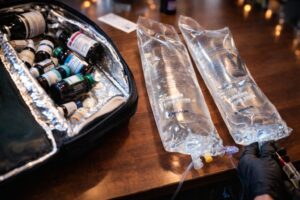
Clinically guided IV hydration in Boulder can sometimes restore circulatory stability more efficiently than oral intake alone, particularly when appetite or nausea limits fluid consumption.
The goal is stabilization, not substitution.
For more detail on how hydration functions at altitude, see our guide on IV therapy for energy and recovery.
How Altitude Complicates the Decision
One of the challenges unique to Boulder is symptom overlap.
Mild altitude exposure can cause:
-
Headache
-
Reduced sleep quality
-
Fatigue
-
Mild dizziness
Dehydration can cause similar symptoms.
Heat exhaustion can present in nearly identical ways.
This overlap often leads individuals to underestimate severity or overestimate urgency.
Clinical criteria align with established high altitude illness guidance.
For example, a resident training near Pearl Street after work may attribute persistent headache solely to exertion, when in fact both dehydration and early altitude adaptation are contributing.
On the other hand, a tourist flying into Denver and driving immediately to higher elevations may misinterpret moderate altitude symptoms as a medical emergency.
Understanding this nuance allows care decisions to be proportional rather than reactive.
For a deeper look at when supportive IV care aligns with physiology, review When Supportive IV Care Makes Sense and When It Does Not.
Cost and Time Considerations in Boulder
Urgent care centers provide essential medical evaluation and are appropriate when diagnostic clarity is needed.
However, not every case of moderate dehydration requires imaging, laboratory testing, or extended observation.
When symptoms are stable and clearly linked to exertion or fluid imbalance, structured hydration support may offer a more targeted approach.
This is particularly relevant for:
-
Endurance athletes after events such as Bolder Boulder
-
Recreational hikers
-
Students adjusting to altitude at CU Boulder
-
Professionals experiencing exertional fatigue
In these cases, decision making should reflect severity, not anxiety.
A Practical Framework for Decision Making
Before choosing urgent care or IV therapy, consider the following:
-
Are symptoms severe or worsening rapidly?
-
Is breathing affected at rest?
-
Is mental clarity impaired?
-
Did symptoms begin after identifiable exertion or heat exposure?
-
Has oral hydration improved symptoms at all?
-
Is this your first exposure to high altitude in Boulder or the surrounding mountains?
If red flag symptoms are present, urgent care is appropriate.
If symptoms are moderate, situational, and stable, supportive hydration may align with physiology.
The Role of Supportive Therapies in Altitude Adaptation
In some cases, hydration alone is not the only factor.
Circulatory support, recovery modulation, and oxidative stress management may play a role in altitude environments. Therapies such as ozone therapy for circulatory support are sometimes integrated into broader recovery planning when clinically appropriate.
These approaches are not emergency interventions. They are structured tools within a comprehensive altitude strategy.
They are most effective when applied intentionally.
A Balanced Clinical Perspective
Urgent care and IV therapy are not competitors.
They serve different purposes.
Urgent care evaluates and stabilizes potentially serious conditions.
IV therapy supports hydration and recovery when systems are strained but stable.
In a high altitude environment like Boulder, the key is correct classification of symptoms.
If you are uncertain whether your symptoms require diagnostic evaluation or hydration support, a brief clinical discussion can help clarify the most appropriate next step.
Context protects outcomes.
And at 5,430 feet, context matters more than intensity.
Common Questions About Urgent Care vs IV Therapy in Boulder
Do I need urgent care for altitude sickness in Boulder?
Urgent care is appropriate if altitude symptoms include severe headache, repeated vomiting, confusion, or shortness of breath at rest. Mild headache and fatigue without neurological symptoms may not require emergency evaluation.
Can IV therapy treat altitude sickness?
IV therapy may assist with dehydration related symptoms at altitude. It does not treat severe altitude sickness or replace medical evaluation when symptoms escalate.
How do I know if dehydration is serious?
Dehydration becomes concerning when it causes persistent dizziness, confusion, rapid heart rate, or inability to tolerate fluids. In these cases, medical evaluation is recommended.
Is it normal to feel worse after hiking the Flatirons?
Fatigue and headache after exertion at 5,430 feet are common, especially for new residents or visitors. If symptoms improve with rest and hydration, they are often self-limited.