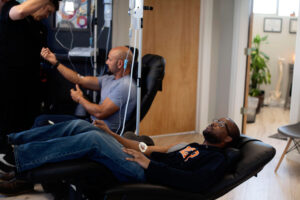
Proactive health care focuses on awareness, timing, and long-term support to help maintain balance before problems escalate. Many people think of health care as something you turn to when a problem appears. You feel unwell, something hurts, or your energy drops significantly. Then you look for answers.
That approach is common, but it is not the only way to relate to health.

Proactive health care focuses less on reacting to problems and more on supporting the body before those problems take shape. It emphasizes awareness, timing, and adjustment rather than urgency or crisis.
Supportive medical therapies are often used within this proactive framework to help maintain balance during periods of increased demand rather than waiting for symptoms to become disruptive.
Understanding what proactive care looks like in real life helps shift health from something you respond to into something you actively maintain, especially when it is integrated into a broader approach to long-term wellness care.
Reactive Care Versus Proactive Care
Reactive care begins when symptoms become disruptive. It often focuses on identifying a specific issue and addressing it directly.
Proactive care works earlier, focusing on prevention and early awareness, an approach widely discussed by the National Institutes of Health.
It pays attention to:
- Gradual changes in energy or recovery
- Patterns that repeat over time
- Subtle signals that something is off
- Context, not just symptoms
Neither approach is inherently wrong. The difference lies in timing.
Proactive care aims to reduce the need for crisis-driven decisions by supporting balance before breakdown occurs.
Proactive Care Is Not About Perfection
A common misconception is that proactive health care requires constant monitoring or rigid routines. In reality, it is often more flexible than reactive care.
Proactive care does not mean:
- Tracking everything all the time
- Eliminating every fluctuation
- Preventing every setback
Instead, it means noticing trends and responding thoughtfully. Some weeks require more attention. Others require less. The focus stays on adaptation, not control.
The Role of Awareness in Long-Term Health
Awareness is the foundation of proactive care.
This includes noticing:
- When recovery feels slower than usual
- When stress feels harder to shake
- When energy dips despite consistent habits
- When motivation changes without a clear reason
These patterns often reflect how stress and recovery interact over time, rather than a single isolated issue and appear long before a clear problem develops. Proactive care treats them as information rather than inconvenience.
Public health frameworks from the Centers for Disease Control and Prevention emphasize early awareness as a key part of long-term health maintenance.
Responding early often requires less effort than waiting until the body feels overwhelmed.
Why Proactive Care Feels Different

Many people describe proactive care as calmer than reactive care.
There is less urgency, less pressure, and fewer drastic decisions. Adjustments feel intentional rather than forced. Support is applied with context instead of desperation.
This approach also reduces self-blame. Fatigue or stress are no longer signs of failure. They are signals that the body’s demands have changed.
How Proactive Care Fits Into Everyday Life
In practice, proactive health care is subtle.
It may look like:
- Periodic check-ins instead of crisis appointments
- Adjusting support during high-demand periods
- Scaling care up or down based on current needs
- Maintaining communication rather than starting over each time
For many people, this starts with a clinical conversation that looks at patterns over time rather than isolated symptoms. The goal is continuity, not constant intervention.
Proactive Care and Long-Term Support
Proactive care works best when it aligns with long-term wellness support.
Together, they emphasize:
- Consistency over intensity
- Adjustment over rigidity
- Prevention over correction
- Understanding over urgency
This combination helps people maintain stability even as life changes.
Redefining What “Doing Well” Means
In a reactive model, doing well often means “nothing is wrong.”
In a proactive model, doing well means:
- Energy feels relatively stable
- Recovery matches activity levels
- Stress remains manageable
- Small changes are addressed early
This shift creates a more sustainable relationship with health. The goal becomes staying balanced rather than chasing perfect outcomes.
Because these elements are interconnected, some forms of support focus on long-term regulation rather than short-term relief. Therapies such as NAD+ are often discussed in this context when the goal is sustained energy and resilience over time.
A More Supportive Way to Think About Health 
Proactive health care recognizes that the body is dynamic. Needs change. Demands fluctuate. Support adjusts.
Rather than asking, “How long can I push before something breaks?” proactive care asks, “What helps me stay steady over time?”
This mindset encourages long-term resilience rather than short-term fixes.
Bringing It All Together
Throughout the previous weeks, we’ve explored:
- How low energy and poor recovery show up
- Why internal systems influence how we feel
- The role of supportive care in specific contexts
- How integration supports long-term wellness
Proactive health care ties all of these together. It provides a framework that values timing, awareness, and continuity.
A Thoughtful Path Forward
At Awaken IV, proactive health care is approached as an ongoing process, not a single decision. The focus is on understanding patterns, adjusting support thoughtfully, and maintaining balance as life evolves.
Health does not need to be managed through urgency or extremes. With the right perspective, it can be supported steadily and intentionally over time.
Proactive care is not about doing more. It is about paying attention earlier and responding with clarity.