Hydration is one of the most important aspects of overall health, yet it is often misunderstood. Many people assume that drinking more water is always enough, regardless of the situation.
In reality, hydration is not just about how much water you consume. It is about how effectively your body absorbs and uses fluids, especially during periods of stress, illness, or physical activity.
This is where comparisons between IV therapy and drinking water begin to appear. While both aim to support hydration, they work in very different ways, and understanding those differences can help clarify when each approach may be more appropriate.
In a place like Boulder, where altitude, dry air, and active lifestyles are part of everyday life, hydration plays an even more important role in recovery and performance.
Key Takeaways
• Drinking water supports daily hydration and is essential for general health.
• IV therapy is often discussed in situations where faster or more direct hydration support is needed.
• The difference lies in how fluids are delivered and absorbed by the body.
How Hydration Works in the Body
When you drink water, it must pass through the digestive system before it enters the bloodstream. This process takes time and depends on factors such as gut health, electrolyte balance, and overall hydration status.
Under normal conditions, this works well. The body regulates fluid levels and distributes water where it is needed.
However, during dehydration, intense physical activity, or illness, this process may not be as efficient. The body may struggle to absorb fluids quickly enough to restore balance.
Research into hydration and fluid absorption, such as clinical hydration and fluid balance studies, continues to explore how the body regulates fluids under different conditions.
What Makes IV Therapy Different?
IV therapy delivers fluids directly into the bloodstream. This bypasses the digestive system and allows hydration and nutrients to be available immediately.
Because of this, IV therapy is often discussed in contexts where faster support may be needed, such as after intense activity, dehydration, or fatigue.
For individuals exploring hydration support in a clinical setting, IV therapy in Boulder is commonly mentioned as an option that focuses on direct delivery of fluids and nutrients.
This does not replace the role of drinking water. Instead, it represents a different approach that may be considered depending on the situation.
IV Therapy vs Drinking Water: Key Differences
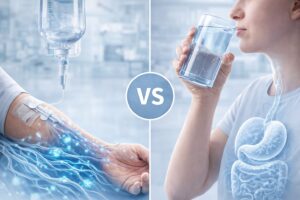
The main difference between these two approaches is how hydration is delivered and how quickly the body can use it.
Drinking water supports long term hydration and is essential for maintaining daily balance. It works gradually and relies on the body’s natural absorption processes.
IV therapy, on the other hand, is often discussed in situations where hydration needs to be restored more quickly. Because fluids are delivered directly into circulation, the process is more immediate.
This difference becomes especially relevant in environments like Boulder, where altitude can increase fluid loss and physical activity levels are often high.
When Drinking Water May Not Be Enough
There are situations where drinking water alone may not fully address hydration needs.
This can include prolonged physical activity, exposure to heat, illness, or altitude related dehydration. In these cases, the body may lose fluids and electrolytes faster than they can be replaced through normal intake.
Some individuals also experience fatigue, brain fog, or slower recovery when hydration is not properly restored.
In these contexts, people often begin exploring additional strategies to support hydration and recovery.
Hydration, Recovery and Performance in Boulder

Boulder presents unique challenges when it comes to hydration. The altitude, dry climate, and active lifestyle all contribute to increased fluid loss.
People who hike, climb, or train regularly may find that hydration becomes a limiting factor in performance and recovery.
Because of this, many individuals look beyond basic hydration and explore different approaches that support recovery more effectively.
Some also explore options such as NAD therapy when focusing on energy and cellular support, or peptide therapy treatments as part of longer term recovery strategies.
Clinics such as Awaken IV focus on helping individuals understand how hydration fits into overall wellness and recovery.
If you are unsure which approach aligns best with your needs, you can take the peptide therapy quiz to explore options based on your goals.
If you prefer direct guidance, you can also contact our clinic to learn more about hydration and recovery focused services.
Conclusion
Hydration is more than just drinking water. It involves how the body absorbs, distributes, and uses fluids under different conditions. In Boulder, altitude and dry conditions can make hydration more challenging than expected.
While drinking water remains essential for daily health, IV therapy represents a different approach that may be explored in situations where faster or more direct hydration support is needed.
Understanding these differences can help you make more informed decisions based on your lifestyle, activity level, and recovery needs.
For individuals living in environments like Boulder, where hydration demands are higher, taking a more intentional approach to hydration can make a meaningful difference in overall performance and well being.

Frequently Asked Questions
Is IV therapy better than drinking water?
They serve different purposes. Drinking water supports daily hydration, while IV therapy is often discussed in situations requiring faster hydration support.
How quickly does IV therapy work?
Because fluids are delivered directly into the bloodstream, the effects are often described as more immediate compared to drinking water.
Can you replace water with IV therapy?
No. Drinking water is essential for daily hydration and overall health.
Why does hydration feel harder at altitude?
Higher altitude can increase fluid loss through breathing and activity, making it harder to stay hydrated.
When should someone consider additional hydration support?
Situations involving dehydration, fatigue, or intense activity may lead individuals to explore additional hydration strategies.