
Rest is supposed to help you feel better. You sleep, you take days off, you slow down when you can. And yet, the fatigue lingers.
For many people, especially those who stay active or manage busy lives, rest alone doesn’t always bring energy back. This can be confusing and discouraging. If you’re doing what you’re “supposed” to do, why doesn’t it work?
The answer often lies deeper than habits. Energy is not restored simply by stopping activity. It depends on how well the body can produce energy at a cellular level.
This is often part of a broader systems-level issue affecting how the body produces and restores energy.

What “Cellular Energy” Really Means
Every cell in your body requires energy to function. Muscles, brain tissue, organs, and immune cells all rely on a constant supply of usable energy to do their jobs.
This energy is produced inside the cells through complex processes that depend on:
Oxygen availability
Nutrient delivery
Proper cellular signaling
Efficient waste removal
When these processes work well, the body feels resilient. When they don’t, energy production slows, even if you’re resting.
Why Rest Alone Isn’t Always Enough
Rest reduces demand, but it doesn’t automatically improve supply.
If the systems responsible for producing energy are under strain, simply resting may not fully restore energy levels. You may feel slightly better after sleep or time off, but never fully recharged.
This often leads people to believe they need more sleep, more days off, or less activity. While those can help temporarily, they don’t always address why energy production is struggling in the first place.
Common Factors That Reduce Cellular Energy Efficiency
Low cellular energy is rarely caused by a single issue. It usually reflects several small stresses adding up over time.
Oxygen delivery challenges
Oxygen is essential for efficient energy production. At higher elevations, such as those found throughout Colorado, oxygen availability is naturally lower.
Even in healthy individuals, this can place extra demand on cellular energy systems, especially during physical or mental stress.
Nutrient availability and absorption
Calories alone do not guarantee adequate energy production. Cells require specific nutrients to convert fuel into usable energy.
If nutrient delivery, absorption, or utilization is suboptimal, energy production can slow without obvious warning signs.
Ongoing stress and signaling demands
Stress signals tell the body to prioritize immediate performance over long-term repair. When these signals stay elevated, energy resources are diverted away from restoration.
Over time, this can leave cells functioning, but not optimally.
Why Fatigue Can Exist Without Clear Medical Findings
Many people with low cellular energy are told that their labs look normal. This can be frustrating and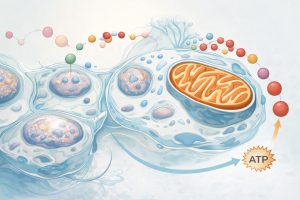 invalidating.
Standard tests are designed to identify disease, not to measure how efficiently energy systems are functioning under load. It is possible for everything to appear normal while the body is operating closer to its limits.
Research published by the National Institutes of Health shows that cellular energy processes can be affected long before disease is detectable.
This gray zone is where many people live for years, feeling tired but not “sick.”
The Difference Between Functioning and Thriving
The body is remarkably good at adapting. When energy production becomes less efficient, it compensates by lowering output.
You may still get through your day. You may still exercise, work, and meet responsibilities. But you do so with less margin, less resilience, and less recovery.
Over time, this adaptive state can become exhausting in itself.
This often shows up as low energy and slow recovery becoming part of daily life.
Understanding Energy as a System
Energy is not restored by one habit or one intervention. It reflects how multiple systems work together.
When cellular energy production improves, people often notice:
- More consistent energy throughout the day
- Better recovery from activity
- Improved mental clarity
- Greater tolerance to stress
- Understanding this helps explain why fatigue can persist even when rest, nutrition, and sleep seem adequate.
Awareness Before Action
Feeling tired despite doing “everything right” does not mean you are failing your body. It often means your body is adapting to demands that exceed its current capacity.
Learning how energy is produced at a cellular level can shift the conversation from self-blame to understanding. That awareness creates space for more informed, supportive decisions over time.
At Awaken IV, many people begin by simply wanting clarity. They want to understand why rest doesn’t restore them the way it used to and what may be happening beneath the surface.
Understanding cellular energy is one step toward that clarity.