If knee pain is slowing you down, you’re not alone.
Millions of people deal with arthritis, sports injuries, or chronic joint pain that makes everyday movement harder than it should be.
While surgery and pain medications are common go-to options, there’s another treatment gaining attention: PRP treatment for the knee.
PRP (platelet-rich plasma) is an injection made from your own blood that helps reduce knee pain, repair tissue, and improve mobility naturally.
At Awaken IV, we focus on regenerative solutions that help your body heal itself, without relying on surgery or long-term medications.
What Is PRP and How Does It Work in the Knee?
PRP stands for platelet-rich plasma.
It’s made by drawing a small sample of your blood, spinning it in a centrifuge, and separating the platelets from the rest.
These platelets are loaded with growth factors that play a big role in healing and tissue repair.
When PRP is injected directly into the knee joint, it delivers a concentrated dose of those growth factors to areas that need healing.
That boost can help reduce inflammation, improve mobility, and support the repair of damaged cartilage, tendons, or ligaments.
Simply put, PRP is your body’s own healing power, concentrated and directed at your knee.
Why Choose PRP for Knee Pain?
PRP treatment has become especially popular for knee osteoarthritis and sports injuries.
Studies show it can:
- Reduce pain and stiffness
- Improve knee function
- Slow down the progression of arthritis
- Offer longer-lasting relief than cortisone injections
In fact, multiple clinical trials have found PRP more effective than hyaluronic acid (gel shots) in improving knee pain and mobility for people with osteoarthritis.
PRP vs Other Knee Treatments
People often want to know how PRP compares to other common knee treatments.
PRP vs Cortisone Injection for Knee
Cortisone shots reduce inflammation quickly, but the relief is usually short-lived.
PRP may take a few weeks to kick in, but the results can last longer because it actually encourages healing instead of just masking symptoms.
PRP vs Surgery for Knee Arthritis
Surgery is invasive, comes with long recovery times, and isn’t always guaranteed to provide lasting relief.
PRP offers a less invasive alternative that may help delay or even avoid the need for surgery.
What to Expect During PRP Knee Treatment
At Awaken IV, the process is straightforward and typically takes about an hour.
Here’s what happens:
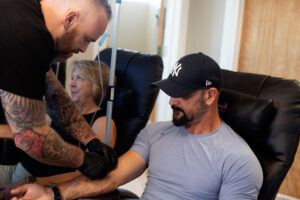
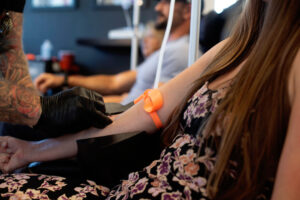
- A small amount of blood is drawn from your arm.
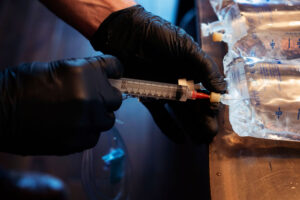
- The blood is spun in a centrifuge to concentrate the platelets.
- The PRP is injected into your knee joint using precision techniques.
Does PRP Knee Injection Hurt?
Most patients describe it as mild discomfort rather than real pain.
Any soreness usually fades within a couple of days.
How Many PRP Injections Are Needed for Knees?
This depends on the severity of your condition.
Some people feel better after just one injection, while others may need a series of two to three treatments for the best results.
PRP Knee Injection Recovery and Results
Recovery is generally quick.
Most patients return to normal activities within a day or two, but you’ll want to avoid heavy exercise for about a week.
So how long does PRP last for knees?
Results can last anywhere from six months to a year, sometimes longer.
Many patients report reduced pain and improved function after just a few weeks, with continued improvement over time.
Risks and Side Effects of PRP Knee Injections
Because PRP uses your own blood, side effects are rare.
The most common ones include:
- Temporary soreness at the injection site
- Mild swelling or stiffness for a few days
Serious risks are extremely rare, making PRP a safe option for most people.
Who Is a Good Candidate for PRP Therapy?
PRP works best for people with mild to moderate knee osteoarthritis, sports injuries like meniscus tears, or chronic tendon and ligament issues.
It may not be as effective if the arthritis is severe or if there’s significant joint damage.
If you’re looking for a way to reduce knee pain, delay surgery, and stay active, PRP may be worth considering.
PRP Knee Treatment at Awaken IV
At Awaken IV, we specialize in regenerative therapies designed to help your body heal itself.
Our team takes the time to understand your condition, your goals, and your lifestyle so we can create a personalized treatment plan that fits your needs.
If you’re searching for PRP knee injections we’re here to help.
Schedule a consultation today and take the first step toward moving without pain.
Final Thoughts
PRP treatment for the knee offers a safe, natural, and effective way to manage pain and improve mobility without surgery.
It’s not a quick fix, but for many people it provides lasting relief and a better quality of life.
At Awaken IV, we believe in helping your body heal itself.
If you’re ready to take the next step toward living pain-free, reach out today to learn more about PRP knee injections and whether they’re right for you.
FAQs
Is PRP worth it for knee pain?
For many people, PRP is worth it because it reduces pain, improves mobility, and may delay or even prevent the need for surgery. Results often last longer than traditional injections like cortisone.
What are the side effects of PRP injection in the knee?
Side effects are usually mild and temporary, such as soreness, swelling, or stiffness at the injection site. Serious complications are extremely rare since PRP comes from your own blood.
What is the recovery time for PRP injections in the knee?
Most people resume normal daily activities within a day or two, but it’s best to avoid strenuous exercise for about a week. Full benefits are usually felt within four to six weeks.
Can you walk after a PRP knee injection?
Yes, you can typically walk right after the procedure. Some mild discomfort may occur, but it generally doesn’t prevent you from doing light walking or daily tasks.
How many times can PRP be done for the knee?
PRP can be repeated as needed. Most people benefit from one to three sessions spaced several weeks apart, and some choose maintenance treatments every 6–12 months.
Does PRP help with arthritis?
Yes, PRP has been shown to help people with mild to moderate knee arthritis by reducing pain, improving joint function, and slowing down further cartilage damage.